
Books Published by Ārsha Vidyā Paramparā Trust
Books Published by Ārsha Vidyā Paramparā Trust
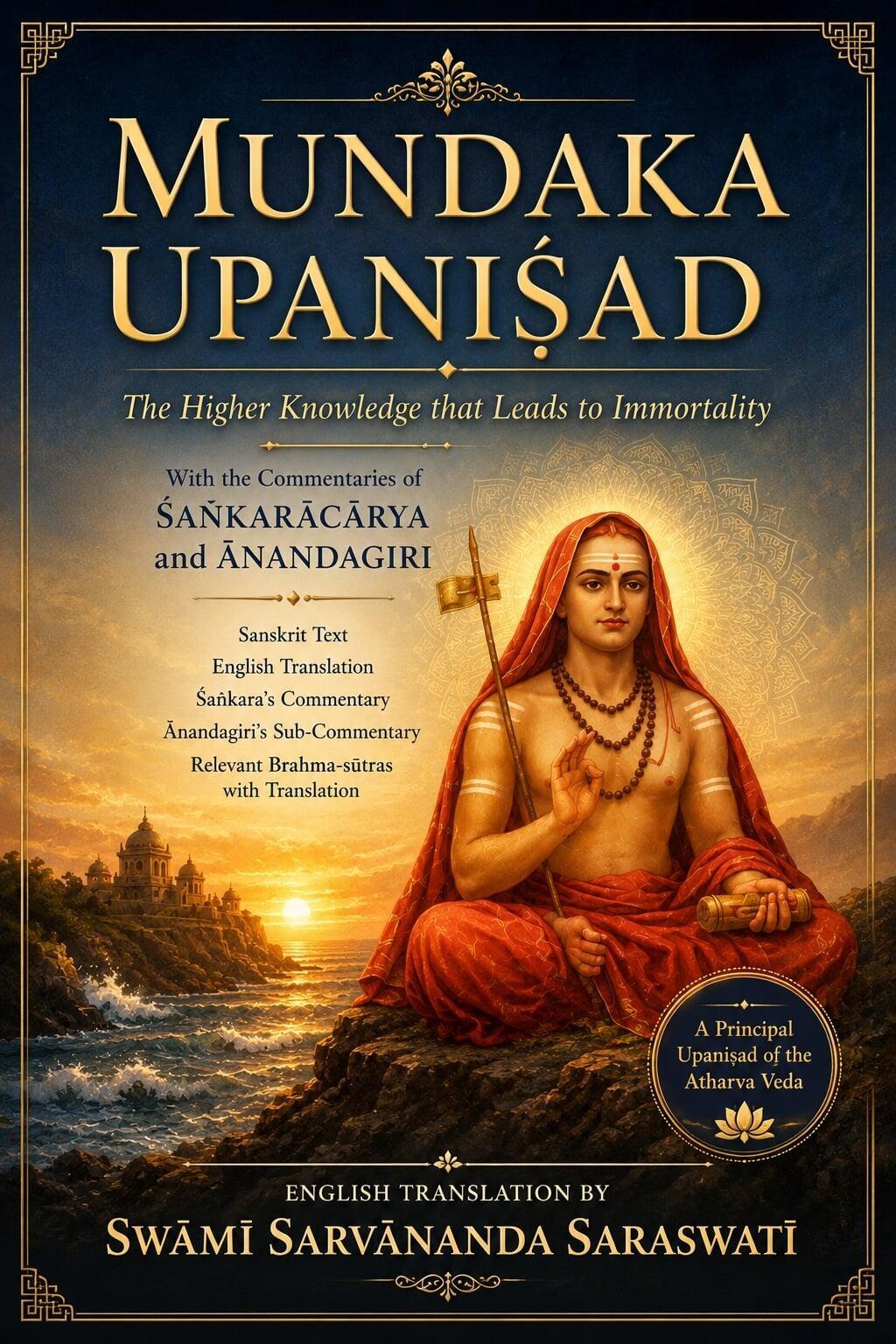
Muṇḍaka Upaniṣad with Śaṅkara bhāṣya and Ānandagiri ṭīkā
The Muṇḍaka Upaniṣad is one of the principal Upaniṣads expounding the vision of Advaita Vedānta. This edition, published on Amazon, presents a precise English translation of the Upaniṣad along with the commentary of Ādi Śaṅkarācārya and the sub-commentary of Ānandagiri.
The text distinguishes Self-knowledge from all other forms of knowledge and clearly establishes the limitations of karma. It unfolds the nature of ignorance, the preparation required of a seeker, and the means to liberation through knowledge.
This work is intended for serious students of Vedānta who wish to study the text in a traditional and comprehensive manner, with attention to both the primary teaching and its detailed exposition in the commentarial tradition.
This book presents:
- An English translation of the Muṇḍaka Upaniṣad
- The commentary (bhāṣya) of Ādi Śaṅkarācārya with English translation
- The sub-commentary of Ānandagiri with English translation (as footnotes to the Śaṅkara-bhāṣya)
- Translations of Ādi Śaṅkarācārya's commentary (bhāṣya) to relevant Brahma-sūtras, connected to selected mantras
While English translations of the Upaniṣad with Śaṅkaracārya’s commentary are available, editions that also include English translations of Ānandagiri’s sub-commentary are not available. This work addresses that gap and offers a more complete presentation of the traditional teaching.
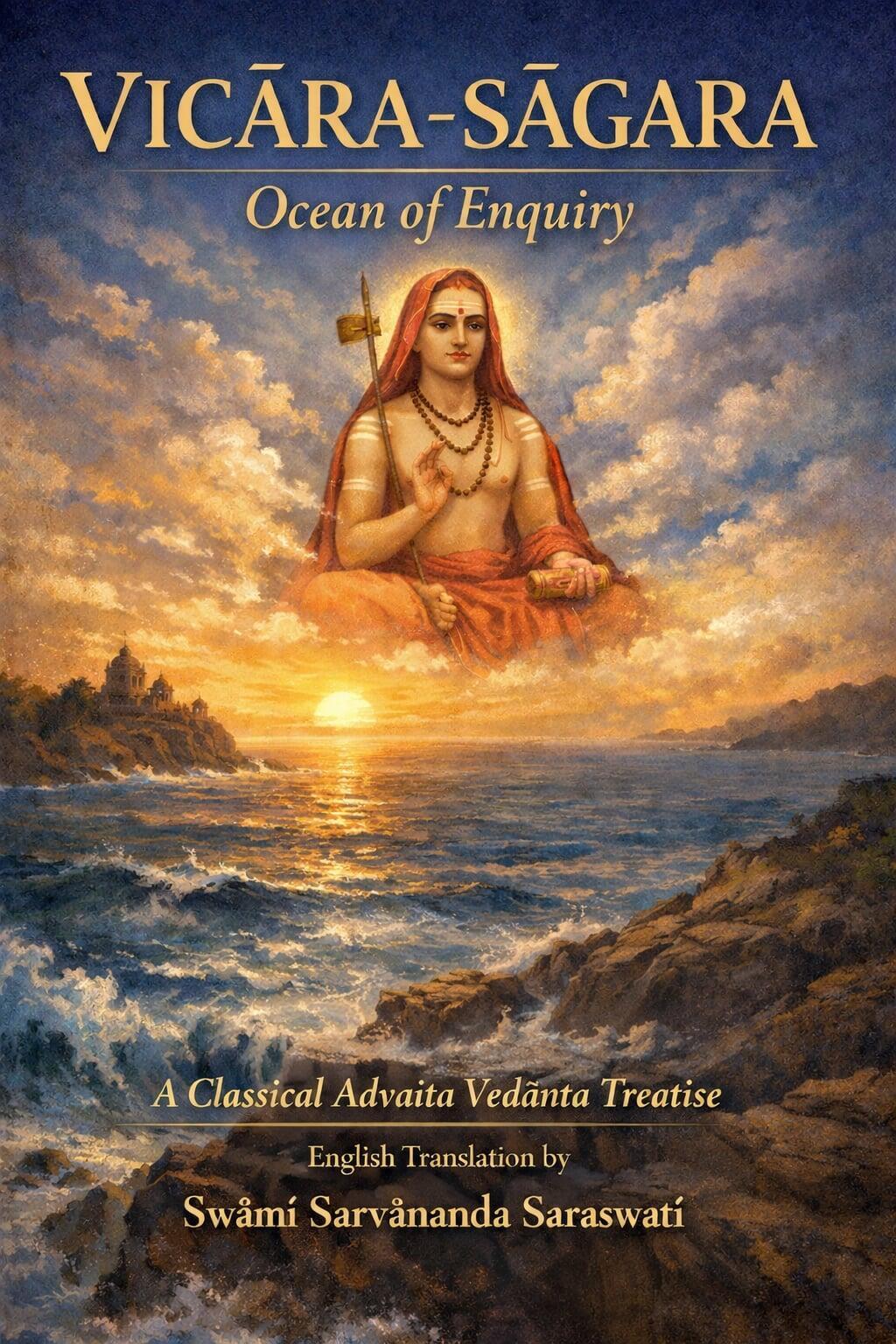
Saṃskṛta–vicāra-sāgara — A Traditional Advaita Vedānta Text
Vicāra-sāgara (“Ocean of Enquiry”) is a systematic Advaita Vedānta treatise, written in the 19th century, that presents liberation as clear understanding gained through disciplined enquiry (vicāra), firmly grounded in the Upaniṣads and the tradition of Ādi Śaṅkaracārya.
This book, published on Amazon, presents a complete and faithful translation of the Saṃskṛta–vicāra-sāgara, preserving both the philosophical intent and the literary character of the original work. In order to maintain a living connection with the source text, key Sanskrit terms are consistently retained alongside their English renderings. This ensures that the translation remains anchored to the original terminology, while also serving a pedagogical purpose by firmly acquainting readers with essential Vedāntic vocabulary.
The text explains why enquiry itself is the direct means to freedom, and clarifies the proper roles of śravaṇa (listening), manana (reflection), and nididhyāsana (contemplation). It resolves confusion regarding Self and non-Self, bondage and liberation, and the status of the world, using precise reasoning supported throughout by Vedāntic scripture.
Originally composed in Hindi by the saint-scholar Niścaladāsa and later rendered into clear Sanskrit by Śrī Vāsudeva Brahmendra Sarasvatī, this work has long held a place of authority within the Advaita tradition. This translation aims not merely at verbal equivalence, but at communicating the clarity and spirit that have made the text enduringly valuable.
This is not devotional literature or abstract speculation. It is a direct teaching text, intended to serve as a reliable guide for serious students of Vedānta and as a sustained aid for seekers engaged in enquiry into the Self.